Quarry Screening
Quarry screening applications for Red Star Wire Mesh screens, published by a Hebei, China screen supplier.
The quarry screening task
Quarry screening separates crushed stone and aggregate, and the feed is typically hard, angular, and abrasive. The screening surface has to separate that material into sizes while withstanding constant impact and wear, and the task is often carried out in open, dusty settings where the surface is exposed to the weather as well as to the feed. A buyer describing a quarry task should name the stone being screened, describe the size mix, and say whether the feed is dry or damp, because those details drive the family choice.
Quarry work also produces a wide range of sizes in a single feed, from large pieces down to fines, and the screening task may involve several stages. A surface that suits one stage may not suit another, and the inquiry should describe the stage the screen belongs to, rather than presenting quarry screening as a single undifferentiated task. The supplier can then respond to the specific stage instead of to quarry work in general.
Which families quarry buyers ask about
Woven wire screens are widely used in quarry screening, because a woven surface suits high-volume separation of stone and aggregate. Polyurethane screens enter the picture where impact or wear dominates, since a resilient surface absorbs the impact of heavy stone. Perforated plates suit stages where a fixed opening pattern is wanted. A quarry buyer should describe the stone and the stage, and name the families being considered, so the supplier can compare them for the stated task rather than recommending from habit.
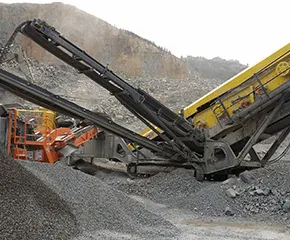
The quarry photograph on this page shows a mobile screening plant at work, and it illustrates the setting rather than any particular screen. It is captioned as a site photograph from the company website, not as a factory photograph, and it carries no claim about which screen family is fitted to the plant shown. A buyer should not read a product choice into a photograph of a setting.
What to describe in a quarry screening inquiry
A quarry screening inquiry should describe the stone, the size mix, the stage of screening, and whether the feed is dry or damp. It should describe the setting and the equipment, and say whether impact, wear, or clogging is the greater concern. Those details let the supplier say which family fits and what else it needs to know, without a round of messages spent correcting the premise.
The inquiry should also ask about certificate scope for the chosen family, and about the minimum order and lead time for the quantity being considered. As with every topic on this site, those carry no published figures, so they are framed as questions to confirm. A buyer who describes the quarry feed and stage concretely will receive a more useful answer than one who only names the industry direction.
A final note on quarry screening inquiries
A quarry screening inquiry benefits from naming the stage of screening, because quarry work typically involves several stages and a surface suited to one stage may not suit another. A buyer who describes the stage, the stone, and the size mix at that stage gives the supplier a task it can judge, while a buyer who describes quarry work in general invites an answer fitted to an assumed stage that may not be the right one.
Questions to settle before ordering quarry screens
- What stone is being screened, and what is the size mix of the feed?
- Which stage of screening does the screen belong to?
- Is impact, wear, or clogging the greater concern for this feed?
- Which certificate scope should be confirmed for the chosen family?
Related pages
Ask Red Star about quarry screening
Use the inquiry page to describe the screen category, the intended screening task, and the setting, and to ask about availability, certificates, and timing.
Please confirm the minimum order quantity in your inquiry.
Please confirm the lead time before placing an order.
Please confirm the acceptable trade terms and payment method before confirming an order.
Please describe the screen category, the intended screening task, and the setting in your inquiry, so the supplier can confirm whether the order can be accepted.
Certificates available upon request.
Category names on this site follow the product categories published on the supplier website. No product parameters, aperture figures, wire-diameter figures, material grades, or specification tables are published on this site; those details belong in the inquiry.