Screen Mesh Maintenance Guide
A guide to maintaining screen mesh published by Red Star Wire Mesh Manufacturing Co., Ltd. in Hebei, China.
Why maintenance belongs in the buying decision
Maintenance is often treated as something that begins after a screen is installed, but it belongs in the buying decision, because the surface a buyer chooses determines how much attention it will need. A woven surface, a self-cleaning surface, a polyurethane surface, and a perforated plate each need different attention, and a buyer who ignores that difference may choose a family that the available maintenance cannot support. The inquiry should therefore ask about maintenance for the family being considered, in the same message as the questions about fit and availability.
Maintenance also affects the total picture of an order. A surface that needs frequent attention costs time as well as parts, while a surface that needs little attention may cost more attention in a different way, such as harder replacement. This site publishes no maintenance intervals and no working-life figures, so a buyer should not compare families on assumed intervals. The supplier's answers, given against a described feed and setting, are the only maintenance figures worth comparing.
What maintenance means for each family
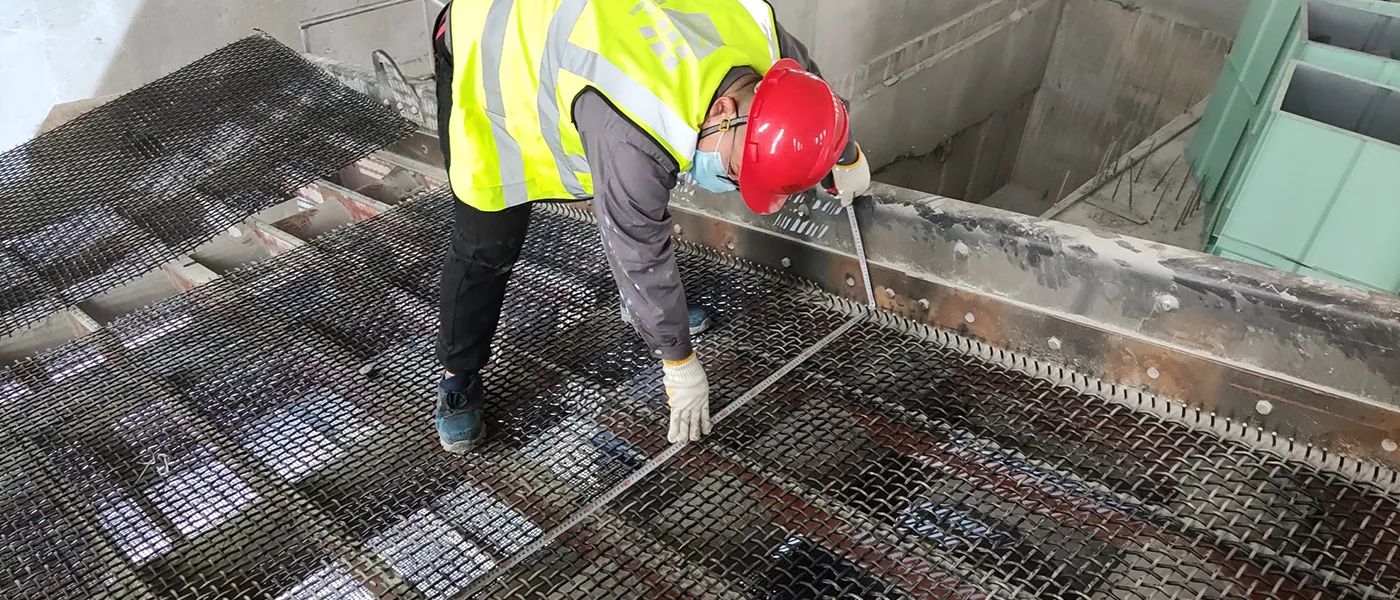
For woven wire screens, maintenance means watching the mesh: whether openings stay clear, whether wires show wear, and when the surface should be replaced. For self-cleaning screens, it means checking whether the self-cleaning behaviour still holds, and whether the surface needs attention despite that behaviour. For polyurethane screens, it means checking wear in the resilient surface and in the openings set in it. For perforated plates, it means checking the plate and the edges of its openings. For accessories, it means checking fit and condition alongside the surface they support.
In every case, the practical questions are the same: how is the condition checked, how often does it need checking, what signs show that replacement is due, and what does replacement involve. A buyer who asks those four questions for the chosen family will have a maintenance picture before ordering, rather than discovering the picture after installation. The inquiry checklist pages include maintenance among the questions to settle, so it is not left until after the order.
How to raise maintenance in an inquiry
An inquiry should describe the feed and the setting, and then ask how maintenance works for the family being considered: how condition is checked, how often attention is needed, what signs indicate replacement, and what replacement involves. It should also say how often the surface can realistically be attended to, because a maintenance plan that assumes daily attention will fail in a setting where attention is weekly. Honesty about available attention is part of a good inquiry.
The inquiry should also ask whether accessories affect maintenance — for example, whether particular fittings make inspection or replacement easier or harder. As with every topic on this site, maintenance carries no published figures, so it is framed as questions to confirm. A buyer who covers maintenance in the first message will receive a reply that can be judged as a whole, alongside fit, availability, certificates, and timing.
Questions to settle about screen mesh maintenance
- How is the condition of the chosen family checked, and how often does it need checking?
- What signs show that replacement is due, and what does replacement involve?
- How often can the surface realistically be attended to in this setting?
- Do accessories affect inspection or replacement for this family?
Related pages
Ask Red Star about screen mesh maintenance
Use the inquiry page to describe the screen category, the intended screening task, and the setting, and to ask about availability, certificates, and timing.
Please confirm the minimum order quantity in your inquiry.
Please confirm the lead time before placing an order.
Please confirm the acceptable trade terms and payment method before confirming an order.
Please describe the screen category, the intended screening task, and the setting in your inquiry, so the supplier can confirm whether the order can be accepted.
Certificates available upon request.
Category names on this site follow the product categories published on the supplier website. No product parameters, aperture figures, wire-diameter figures, material grades, or specification tables are published on this site; those details belong in the inquiry.